Why Hair Care Clinic in Hyderabad Understands Hair Problems Better
Hyderabad has a large metropolitan population and is experiencing a number of issues related to hair, which is why many people now visit a trusted hair care clinic in Hyderabad for proper guidance and treatment. Every household has at least one person who would say they are suffering from hair loss, thinning hair, dandruff and or slow growing hair. To most people it seems that their hair was fine, as of a few years back; however this has changed over time, with many people stating that their hair is continually thinning out, even with the use of quality shampoos and oils.What most people fail to understand is that hair problems are not the same everywhere in the world. Hair problems depend on where you live and what your surroundings are like; it also depends on your schedule and what you usually do on a daily basis. This is where a hair care clinic in Hyderabad has an advantage compared to clinics that follow general treatment methods. Hair problems that local clinics see come and go. Hair Problems Are Not the Same Everywhere People usually think that hair fall means hair fall. However, the causes of hair fall are quite different from area to area. In Hyderabad, doctors often encounter: Gradual thinning instead of sudden hair loss Dry scalp even in young people Hair that looks healthy but falls from the root Repeated dandruff that keeps coming back These problems are closely linked to local conditions. A hair care clinic in Hyderabad notices these patterns daily, not occasionally. This daily exposure builds practical understanding, not textbook knowledge. Water Quality Affects Hair More Than People Expect One of the biggest hidden causes of hair problems in Hyderabad is water. Many areas have hard water. Eventually, the minerals present in the water supply will start to accumulate on the scalp; similarly, over time the water has little or no ability to remove the accumulated minerals from the surface of the scalp itself. This will occur and will eventually cause either dry or itchy skin of the scalp and weakened roots of the hair. Doctors working in a hair care clinic in Hyderabad usually ask about: Water source Recent house changes Difference in hair condition after shifting areas Once water impact is addressed, many patients notice reduced hair fall even without strong treatments. Climate Stress on the Scalp Is Continuous Hyderabad has long summers. Heat stays for most of the year, and this creates constant stress on the scalp. Due to heat: People sweat more Scalp remains damp for long hours Frequent washing removes natural oils This combination weakens hair roots slowly. This is something a hair care clinic in Hyderabad adjusts naturally. Local doctors know this cycle well. Treatments are planned keeping the weather in mind, not based on fixed routines. Pollution and Dust Are Silent Contributors Daily travel, traffic, and construction dust affect hair health more than people realise. The dirt that collects on the scalp can also clog hair follicles; this may lead to irritation and inflammation; many patients report that they have no itching associated with their hair loss, which can be confusing for the patient. Local clinics recognise this pattern quickly. They focus first on calming the scalp instead of immediately starting growth treatments. Lifestyle Patterns Seen Commonly in Hyderabad Doctors here see similar lifestyle habits repeatedly. Common patterns include: Long working hours Late-night meals Skipped breakfasts High stress levels These habits affect hair growth cycles. A hair care clinic in Hyderabad often spends time discussing routine and stress, not just medicines. Patients sometimes underestimate this part, but it plays a big role. Why Generic Online Advice Often Fails Many people mostly first try online solutions before visiting a clinic. Oils, masks, and home remedies may help temporarily, but results don’t last. The reason is simple. Online advice is general. It does not consider local factors like water, climate, and pollution. Local doctors understand what usually works here and what does not. This prevents unnecessary trial and error. Understanding Hair Loss Stages Through Local Experience Hair loss does not happen overnight. It moves slowly through stages. Local clinics identify whether: Hair fall is temporary Thinning is starting Hair density is reducing gradually This early identification helps avoid panic and aggressive treatments. A hair care clinic in Hyderabad sees these stages every day, which sharpens judgment. Treatments Are Adjusted for Real Life Local clinics rarely suggest extreme routines. Instead, treatment plans consider: Work schedule Climate exposure Scalp sensitivity Long-term consistency This makes treatments easier to follow and safer for the scalp. Follow-Ups Matter More Than One-Time Visits Hair treatment is not a one-day solution. It needs time and nearby clinics make follow-ups easier. Doctors can adjust treatments slowly instead of changing everything at once. This steady approach usually gives better results. Why Local Clinics Avoid Over-Treatment Over-treatment damages the scalp. and Local doctors have seen what happens when strong treatments are used unnecessarily. So they prefer gradual methods. This protects hair roots and prevents setbacks. Diet Patterns Seen in Local Patients Diet issues are common but often ignored. Doctors frequently notice: Low protein intake Irregular eating times Excess junk food These affect hair quality over time. Local clinics discuss diet in simple terms, not strict rules. Stress and Hair Fall Connection in City Life Stress is a major trigger and hyderabad’s fast-paced work culture affects sleep and mental health and this shows on hair. Local clinics often connect hair fall episodes with stressful phases. Scalp Health Comes Before Hair Growth Many patients want quick growth solutions. But without scalp health, growth does not last. Local clinics focus first on: Reducing inflammation Controlling dandruff Improving scalp balance Only then do they support growth. Why Patients Feel More Comfortable With Local Clinics Communication matters and patients feel more comfortable explaining habits and problems to local doctors who understand city life. This improves treatment accuracy. Local Clinics See Seasonal Changes Clearly Hair fall increases during certain months. Local clinics notice these cycles
Stress Related Hair Fall: What Hyderabad Doctors Recommend
There is a strong relationship between stress and hair fall. Most people are not aware of this fact initially, and they delay starting the right stress related hair fall at the correct time. They think stress is a part of life. Pressure of work, family, money, health, sleep. All these things become normal slowly. But hair does not accept stress quietly. Hair fall due to stress does not happen overnight. It builds slowly. At first, people notice more hair on the pillow. Then more hair while washing. Then the comb fills faster. Slowly the volume reduces. Hair feels weak. Styling becomes difficult. Confidence goes down without anyone noticing. Many patients come to hair doctors in Hyderabad saying, “I am not sick, I am just stressed.” But stress alone is enough to disturb the hair cycle. Stress related hair fall is very real. Doctors see it every day. Why Stress Affects Hair So Much When the body enjoys any kind of stress, whether physical or mental, it releases hormones. These major hormones are referred to as cortisol. When there are excess amounts of this hormone, it influences other body functions. The body’s hair is one such case. Hair follicles are very sensitive. They require good blood supply, proper nutrients, and proper hormonal levels. Stress, in fact, affects all three requirements. Because of stress: Blood circulation reduces Nutrient absorption reduces Sleep quality drops Hormonal balance gets disturbed Hair slowly moves from growth phase to shedding phase. This type of hair fall is often called stress-related hair fall. Doctors also call it telogen effluvium in many cases. But for patients, the name does not matter. What matters is hair keeps falling, and starting the right stress related hair fall at the right time makes a big difference. Why Stress Hair Fall Feels Sudden Stress hair fall often feels sudden because stress itself builds silently. Many people do not realise how stressed they are until hair starts falling. Stress can be emotional, mental, or physical. Long working hours. Night shifts. Relationship issues. Exams. Illness. Surgery. COVID recovery. All these can trigger stress related hair fall, and early care helps control it better. Doctors in Hyderabad often see patients after: Job changes Work pressure Business loss Personal loss Long-term illness Hair fall usually starts 2 to 3 months after stress begins. This delay confuses people. They do not connect stress with hair fall, especially in cases of stress related hair fall, where the trigger happened months earlier. Stress Hair Fall Is Not Only in the Mind Some people say, “Stress is only metal.” That is not true. Stress causes real physical changes in the body. It affects digestion and proper sleep. It also affects hormones and immunity, which is why early stress related hair fall becomes important to prevent further shedding. When immunity drops, scalp health also suffers. Dandruff increases. Itching increases. The scalp becomes sensitive. All these make hair fall worse. So stress related hair fall is not imaginary. It is physical. How Stress Related Hair Fall Looks Stress related hair fall does not always look the same. Some people experience: Sudden heavy shedding Hair thinning all over Reduced ponytail thickness Hair becoming lifeless Some people notice: Scalp itching Burning sensation Dandruff increase Hair breakage Stress often makes existing hair problems worse. If someone already had mild genetic hair thinning, stress speeds it up. Why Stress Hair Fall Is Common in Hyderabad Doctors in Hyderabad see stress hair fall very often. Reasons include: High work pressure Long commute Traffic stress Heat and weather Irregular food habits Sleep issues The Hyderabad lifestyle puts constant pressure on the body. Combined with pollution and hard water, stress hair fall becomes more severe. Understanding Hair Growth Before Treating Stress Hair Fall Stress pushes more hair into the shedding phase. The aim of treatment is to bring hair back into balance. Hair grows in cycles. Growth phase Resting phase Shedding phase Doctors do not promise instant regrowth. They first try to stop excessive hair fall as part of proper stress related hair fall treatment. Then they strengthen existing hair. Regrowth happens slowly. Expecting fast results often leads to frustration. What Hair Doctors in Hyderabad Actually Recommend Doctors do not treat stress hair fall with one shampoo or one oil. In cases of treatment starts with understanding the stress and identifying the main trigger. Proper Diagnosis Doctors look at: Hair fall duration Pattern of hair loss Scalp condition Stress history Sleep patterns Diet habits Medical history Sometimes blood tests are advised to check iron, thyroid, and vitamin levels. Stress often creates deficiencies indirectly. Without diagnosis, treatment becomes trial and error. Medical Topical Treatments Doctors may prescribe medical lotions or serums to: Reduce excessive shedding Support hair roots Improve growth phase These treatments work only when used regularly. Missing days delays improvement. Supplements When Required Stress affects digestion and absorption. Doctors suggest supplements only when needed. Taking supplements without advice can create imbalance. Scalp Treatments Stress increases scalp inflammation. Scalp therapies help calm the scalp, improve blood flow, and support hair roots. They support recovery but are not magic solutions. PRP in Selected Cases PRP may be suggested if stress hair fall has triggered severe thinning. It works better when combined with medical treatment and stress management. Stress and Lifestyle Correction Doctors always talk about stress management. Sleep improvement Regular meals Balanced nutrition Relaxation techniques Without reducing stress, hair treatment results remain slow. What Does Not Work for Stress Related Hair Fall Doctors see many patients trying things that do not help. Over-oiling Heavy oil increases scalp issues. Changing products frequently Hair needs time. Home remedies for prolonged hair fall They help mild cases only. Ignoring stress Hair will not recover if stress continues. Instant regrowth promises Hair growth is slow. Why Hair Fall Continues Even After Stress Reduces Many patients say, “My stress is less now, but hair fall continues.” This happens because: Hair cycle takes time to reset Deficiencies take time to correct Scalp health needs healing Hair fall
Non Surgical Hair Loss Treatment: Can Hair Loss Be Reversed?
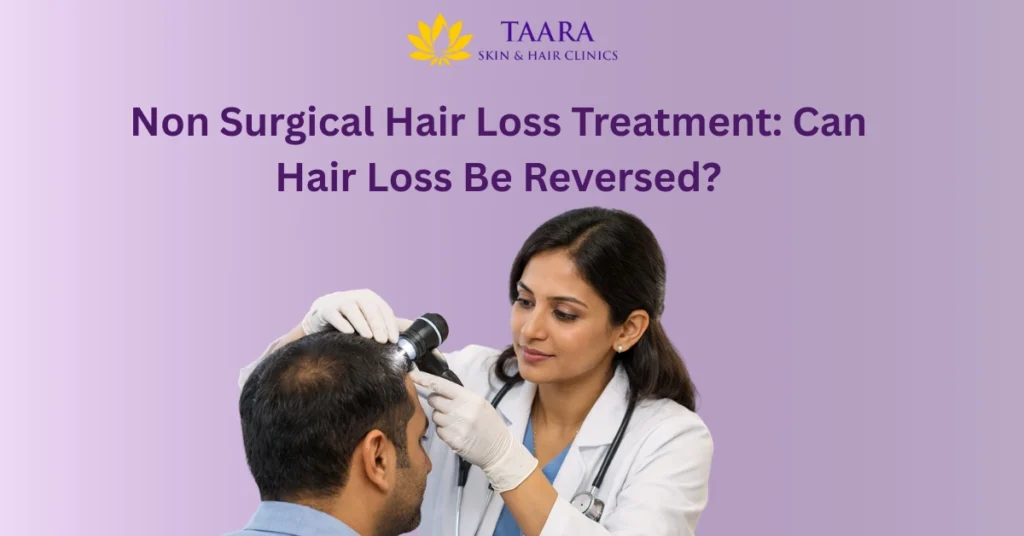
Hair loss is something people don’t just talk about openly. But it disturbs and hurts them. In the beginning, it doesn’t look like a serious issue. Many people start searching for a non surgical hair loss treatment when they first notice extra hair on the pillow or in the comb. They hope it is something simple and treatable without surgery. When you see a few hairs on the pillow as well as a little more hair in the comb, most people ignore it. They think it’s seasonal and related to stress or just bad shampoo. Here months pass and hair doesn’t stop falling. The parting looks wider. The crown feels lighter. The mirror starts showing small changes that were not there before. Styling becomes harder. Confidence quietly drops. Can hair loss be reversed without surgery? Not everyone is ready for surgery. Some feel it’s too early and few are scared. Most of them just want to know if there is a genuine non surgical hair loss treatment that actually works. Doctors hear this question almost every day. And the truth is the answer depends. Why People Feel So Confused About Hair Loss Hair loss doesn’t look the same for everyone. For some people, it’s sudden heavy shedding and for others, it’s been thinning over years. Some notice the hairline moving back and few see thinning on the top. Because it looks different, people try different things. Different things like: Oils. New shampoos. Supplements. Home remedies. Advice from friends. Sometimes hair fall reduces for a short time. Then it comes back and that’s when people start believing nothing works unless surgery is done. But that is not always true. Hair Loss Has Different Causes Doctors don’t treat hair loss as one single problem. It can happen because of: Hormone changes Low iron or vitamin levels High stress Poor sleep Scalp infections Genetics Certain illnesses Here is the important part: Most people don’t know If the hair roots (follicles) are still alive, improvement is possible without surgery and If they are weak, they can often be strengthened and also if they are completely inactive for a long time, regrowth becomes difficult. That’s why timing matters. Understanding Hair Growth Helps Set Real Expectations Hair grows in cycles: Grows. Rests. Sheds. When more hair enters the shedding phase and less hair grows back, thinning becomes visible. No treatment can force hair to grow overnight. Most treatments simply help restore balance in this cycle. That takes time. When Non Surgical Hair Loss Treatment Can Help Doctors usually look at a few basic things: How long the hair fall has been happening Whether thinning is mild or severe Condition of the scalp Family history Lifestyle habits If hair loss is in the early or middle stage, non surgical hair loss treatment can help control it. The goal is simple when you first reduce excessive shedding and also strengthen existing hair. Then slowly support regrowth so this doesn’t happen in weeks. It usually takes months. What Non Surgical Treatment Usually Involves It’s not just one bottle or one session. It’s usually a combination. Medical lotions or solutions These are prescribed to reduce shedding and support hair roots. They need regular use. Stopping midway affects results. Supplements (only if needed) If blood tests show deficiency, supplements are given. They support hair health but are not miracle pills. Scalp treatments These help improve scalp condition and reduce inflammation. Healthy scalp supports better growth. PRP (in selected cases) PRP can help when follicles are still active. It does not work in completely bald areas. It is not needed for everyone. Lifestyle changes This is often ignored. Stress control. Better sleep. Balanced diet. Proper scalp care. Without correcting these, results may not last. What Non Surgical Treatment Cannot Do Now let’s be clear, It cannot grow hair in shiny bald areas where roots are gone. It cannot make hair thick in two weeks. It cannot work if used irregularly. Hair growth is slow by nature. Promises of instant results are unrealistic. Why People Feel It “Didn’t Work” Most of the time, expectations are too fast and some stop treatment in one month and few keep changing products and try too many things together. Hair needs consistency. Interruptions slow everything down. When Surgery Becomes the Better Option If hair loss is very advanced and follicles are no longer active, surgery may be discussed. But even surgery needs maintenance. Doctors usually say treat early, so surgery can be delayed or avoided. Hair Loss Is Not Just Cosmetic Hair reflects overall health. It can be affected by: Hormones Nutrition Stress Scalp health Genetics Treating hair without understanding the cause is like guessing in the dark. That is why dermatologists treat hair loss as a medical issue. City Factors Like Hyderabad Can Make It Worse Doctors in Hyderabad often notice certain triggers. Hard water Minerals collect on the scalp. Over time, hair becomes dry and brittle. Heat and sweat Constant sweating irritates the scalp. Frequent washing removes natural oils. Pollution Dust settles on the scalp and weakens the roots slowly. Lifestyle stress Long work hours and poor sleep disturb the hair cycle. These may not cause hair loss alone, but they can worsen existing problems. How Doctors Actually Examine Hair Loss Many people think doctors simply look at the scalp and prescribe something. But proper evaluation is usually more detailed. First, doctors listen. They ask when the hair fall started. Whether it was sudden or slow. If there was recent illness, stress, weight loss, or hormonal changes. Then they examine the scalp closely. They check: Hair density Thinning pattern Scalp redness or inflammation Miniaturised (thin) hairs Signs of infection In some cases, blood tests are advised to rule out deficiencies or thyroid imbalance. This step is important. Because without understanding the cause, treatment becomes guessing. Two people may have similar looking hair fall, but the reason behind it can be completely different. That is why self-treatment often fails. And that is why early medical
Hair Loss Due to Hormonal Imbalance: Symptoms, Tests and Treatment
Hair loss can be stressful, but when it happens because of hormones, it can feel confusing and frustrating too. Many people first try home remedies or over-the-counter shampoos. Some go to salons hoping for quick fixes. But without proper hormonal hair loss treatment, the root cause remains untreated and hair thinning may continue slowly over time. But hormonal hair loss is different. It usually needs careful assessment and medical guidance. If ignored, hair fall can worsen over time. This blog explains hormonal hair loss, how doctors check it, and what treatment actually works in a simple and honest way. Why People Often Confuse Hair Fall Causes Hair fall does not happen overnight. You may notice: Thinner ponytail Wider hair part More strands on the pillow Extra hair in the shower drain At this stage, hair can still look fine externally. Many assume it’s a styling or care issue. Salons promise quick results. They offer treatments just for shine, smoothness, and frizz control to Hair. Doctors, on the other hand, they treat and talk about cycles, hormones, and gradual improvement. This can feel slow, so many try salon solutions first. How Salons Treat Hair Problems Salons mainly focus on visible hair issues: Dryness Frizz Rough texture Dull appearance Split ends Breakage Common treatments include: Hair spa Smoothening Keratin treatment Protein masks Oil massages Anti-hair fall packages These can make your hair look softer, shinier, and also manageable. But these salons do not check hormone levels and also scalp health, or follicle function. That is why results can be temporary. How Doctors Look at Hormonal Hair Loss Hormonal hair loss is not just about the strands you see. Doctors examine: Pattern and speed of hair fall Scalp condition Family history Duration of hair loss Menstrual cycles or menopause Lifestyle factors Medical history Hair fall from hormones often starts silently. By this time you notice it, follicles may already be thin. Doctors focus on control first, then improvement. The Biggest Difference: Appearance vs Cause Salon Treatments: Improve appearance Work on hair shaft (dead hair) Temporary smoothness Do not change hair growth Hair Specialist Treatments Address root cause Work on scalp and follicles Stop excessive shedding Support long-term regrowth Salons make hair look better, doctors make hair healthier. Symptoms of Hormonal Hair Loss Hormonal hair loss may show as: Gradual thinning on top or crown Wider hair part Excessive shedding Hair breakage Scalp dryness or oiliness Receding hairline (in some cases) Women may notice changes during pregnancy, postpartum, menopause, or thyroid issues. Men may experience pattern baldness due to androgen hormones. Tests for Hormonal Hair Loss A hair specialist may recommend: Blood tests for thyroid hormones Testosterone, DHEAS, and estrogen levels Vitamin D and iron levels Scalp examination and hair pull test These tests identify the cause, so treatment can be specific, not random. Why Salon Results Often Don’t Last for Hormonal Hair Loss Many people say like “I tried a hair spa, but hair fall continued.” This happens because: Hormonal imbalance is not addressed Only surface conditioning is done Follicles remain weak Hair loss from hormones cannot be treated by creams or masks alone. It needs targeted medical care. What Hormonal Hair Loss Treatment Actually Includes Doctors focus on: Stabilizing hormone levels Reducing active hair fall Strengthening existing hair Supporting natural regrowth Treatment may include: Medical lotions or serums Supplements for nutrients Lifestyle and diet adjustments Scalp therapies Stress management Everything is planned gradually and personalized. Why Results Take Time Hair grows slowly. Hormonal balance also needs time. Doctors explain: Hair has a growth cycle Improvement is gradual Visible results appear over months Medical hair care is about stability and long-term health, not instant shine. Hair Specialist vs Salon: A Simple Comparison Salon: Works on hair surface Temporary improvement Cosmetic focus Same treatment for many Hair Specialist: Works on scalp and roots Long-term control Medical focus Personalized treatment Both have roles, but they are not interchangeable. When to Consult a Hair Specialist for Hormonal Hair Loss You should see a doctor if: Hair fall lasts more than 2-3 months Thinning is visible Family history of hair loss Scalp issues persist Salon treatments do not help Early consultation gives better control and prevents permanent damage. Can Salon and Medical Treatments Work Together? Yes, but carefully: Salon care: Improves texture Helps styling Maintains appearance Medical care: Controls hair fall Strengthens roots Supports regrowth The key is medical guidance should lead the process. Lifestyle Factors That Affect Hormonal Hair Loss Hormones are cured by daily habits. Hair specialists often ask about: Sleep patterns Diet and nutrition Stress levels Exercise routines Hair care habits These lifestyles like Poor sleep, high stress, or nutrient deficiencies can increase your hormonal hair loss. Doctors guide these changes gradually. Even if a small adjustments can support hair regrowth and reduce shedding over time. Myths About Hormonal Hair Loss Many people believe things that are not true: “Stress is the only reason for hair fall.” “Hormonal hair loss happens only after menopause.” “Shampoos can fix hormone-related hair loss.” “Hair loss will stop on its own.” These myths delay proper care. Doctors clarify what is real treatment and what is cosmetic thing, so patients can easily focus on effective treatment, not just by any guesses. Preventing Hormonal Hair Loss in the Long Term Prevention is possible if these steps are taken early: Regular check-ups with a hair specialist helps to clear the issue Balanced diet and supplements if needed for your issue Stress management techniques need to be followed Gentle hair care routines Avoiding more chemicals and heat treatments Early action keeps the hair roots strong and helps to reduces shedding and improves the chances of long-term regrowth. Where Hair Needs the Right Kind of Care Hormonal hair loss is often misunderstood and not all hair fall is cosmetic and not all hair fall is medical. Using one in place of the other causes delay and damage. Salon treatments improve appearance. Hair specialists improve growth. Understanding the difference which helps to save
Scalp Infections and Hair Loss: When You Must See a Hair Doctor
Scalp problems usually start very small. Most people do not even take them seriously in the beginning. In many cases, people delay proper scalp infection treatment because the symptoms look mild at first. A little itching and few are flakes, some are red spots. Occasional pimples on the scalp,People think it is dandruff or they think it is because of weather. Some feel it is due to stress or late nights. So they ignore it.Hair fall at that stage is usually normal, so nobody connects the two. But slowly, over weeks and months, the scalp condition does not go away. It stays. Sometimes it becomes worse. Hair starts falling more than before and the scalp feels uncomfortable. Combing becomes painful for some people. Scratching becomes like a habit without realising it. At this stage, many people search for treatment like scalp infection treatment, but still hesitate to see a doctor. They hope it will settle on its own. “This blog is written to explain when scalp problems are harmless and when they need medical attention, especially when hair fall is involved.” Why Scalp Infections Are Often Not Taken Seriously The scalp is not visible like the face. Because of hair, most scalp changes are hidden. People notice: Itching at night Flakes on the shoulder Slight burning after washing A feeling of heaviness on the scalp and these signs look small. So people delay treatment and many believe washing more will fix it. Some start oiling daily, others keep changing shampoos every few weeks. The problem is, scalp infections do not behave like dry skin.They do not improve with random changes. By the time hair fall becomes noticeable, the infection has usually been present for a long time. How Scalp Health Affects Hair Growth Hair does not grow separately from the scalp. Hair roots sit inside the scalp area. When the scalp is healthy: Hair roots stay strong Hair growth cycle stays normal and hair fall also. When the scalp is infected or inflamed: Roots become weak Hair sheds faster New hair growth slows down This is why doctors always look at the scalp first when someone comes with hair fall complaints. Treating hair fall without checking scalp health often gives poor results. Common Scalp Infections seen by Hair Doctors Don’t look all scalp problems are the same, some are different. Doctors see different types, and each behaves differently. Common Fungal Conditions of the Scalp You can see fungal infections are very common in cities like Hyderabad. People notice: Severe itching Thick, sticky flakes Red patches Hair breakage Sometimes small bald-looking areas. Sweat, heat, and humidity make this fungal infections worse. Using oil on an infected scalp often increases the problem. Bacterial Scalp Infections These usually appear as: Painful pimples Boils Swelling Oozing or crusting Scratching spreads the infection and hair fall increases around those areas. Many patients feel pain while combing or washing. Inflammatory Scalp Conditions Some scalp conditions are not infections but still it cause the damage. Few Examples include: Seborrheic dermatitis Chronic dandruff Psoriasis These are the conditions create constant inflammation. Hair roots remain under stress, which leads to continuous hair fall and also causes damage to hair. Why Scalp Infections Are Common in Hyderabad Doctors in Hyderabad usually see the scalp problems that are related to local factors. Hard Water Hard water is a common issue. Minerals from hard water: Dry out the scalp Damage the scalp barrier Increase irritation Many patients notice more itching and hair fall after changing homes or water sources. Heat and Sweat Hyderabad weather causes heavy sweating. Sweat mixed with dust: Blocks follicles Irritates the scalp Encourages infection growth Frequent washing the hair to feel clean which can strip natural oils and worsen the scalp sensitivity. Pollution and Daily Travel Pollution settles on the scalp every day. Without proper scalp cleansing, it leads to: Inflammation Flakes Weak hair roots Stress and Poor Sleep Stress affects immunity. When immunity is low: Infections heal slowly Scalp problems return frequently Hair shedding increases How Scalp Infections Cause Hair Loss Scalp infections affect hair slowly. They: Weaken hair roots Disrupt hair growth cycle Increase shedding phase Reduce regrowth speed Hair loss is usually less, but not sudden. This makes it harder for people to connect it to scalp infection. Why Home Remedies Do Not Solve Scalp Infections Many people try: Aloe vera Lemon Onion juice Oils DIY masks These may reduce itching for some time. But they do not clear infection. In some cases, they irritate the scalp further and Persistent scalp infections need medical treatment, not experiments. What Doctors Do for Scalp Infection Treatment Doctors do not treat scalp problems blindly. Scalp Examination Doctors check: Type of infection Area involved Severity Hair fall pattern Duration of symptoms This step decides the treatment. Medical Shampoos and Lotions Prescription treatments help: Control infection Reduce Inflammation Protect hair roots They must be used for the full duration and stopping early causes recurrence. Oral Medicines Some infections need oral medication. Doctors decide this carefully based on severity. Patients are guided on: Washing frequency Product selection Avoiding scratching Lifestyle triggers Why Hair Fall Improves Only After Infection Is Controlled Hair fall treatments do not work properly if infection is active. Once the scalp becomes healthy: Hair shedding reduces Roots recover Regrowth slowly starts This process takes time. When You Must See a Hair Doctor You should consult a hair doctor if: Itching lasts more than 2 weeks Painful scalp lesions appear Hair fall increases suddenly Bald patches are seen Home remedies fail The problem keeps returning and early treatment protects hair roots. Can Hair Grow Back After Scalp Infection In most cases, yes. Regrowth depends on: How early treatment started Infection severity Damage to hair follicles Delayed care can lead to slower recovery. Scalp Infection Is Not Just Dandruff Dandruff is usually mild and temporary. Scalp infection is persistent and damaging. Treating both the same way delays recovery. Preventing Scalp Infections for Long-Term Hair Health Scalp infections usually come
Hair Specialist vs Salon Hair Treatments: What Is the Real Difference?
When people start losing their hair, the first reaction is usually not to visit a doctor immediately. Instead of searching for a “hair specialist near me”, many people wait, ignore the signs, or try simple home remedies first. This delay can allow hair fall to progress further.Most people first walk into a salon, which feels easier and sometimes feels familiar also. There is no fear of medical tests or diagnosis. The salon promises smooth hair and shiny hair with less hair fall, and quick visible results. At the same time, many people quietly search online for a hair specialist near me, but they hesitate. They are not sure if hair fall really needs medical attention or if salon care is enough. This confusion is very common in Hyderabad. People move back and forth between salon treatments and medical treatments, hoping something will finally work. Some see temporary improvement. Many see no change at all. Others notice hair fall getting worse over time. So what is the real difference between a hair specialist and salon hair treatments? And when should you choose one over the other? This blog gives you the clarity and explains that difference honestly, without exaggeration or fear. It is written to help people understand hair care clearly, not to push quick decisions. Why This Confusion Exists in the First Place Hair fall does not start suddenly for most people. It starts slowly. A few extra strands on the pillow. More hair in the bathroom drain. Thinner ponytail. Wider parting. At this stage, hair still looks “okay” from outside. So people assume it is a care problem, not a medical one. Salons are easily available, they talk confidently and also offer instant treatments and show before-and-after photos. Doctors, on the other hand, talk about time, cycles, and patience. That sounds slow and uncertain to someone who is already worried. This is why many people try salon solutions first. How Salons Look at Hair Problems Salons mainly focus on how hair looks. They deal with: Dryness Frizz Rough texture Dull appearance Split ends Breakage These are visible problems, and salons are trained to improve them. Salon treatments usually include: Hair spa Smoothening Keratin Protein masks Oil massages Anti-hair fall packages These treatments can make hair: Softer Shinier More manageable For some people, especially those with mild damage, this feels like improvement. But salons do not look at: Hair roots Hair growth cycle Scalp inflammation Hormonal influence Nutrient deficiency Genetic sensitivity Because these are not visible on the surface. How Hair Specialists Look at Hair Problems A hair specialist looks at hair very differently. For doctors, hair fall is not just about strands. It is about what is happening under the scalp. A hair specialist checks: Pattern of hair loss Speed of hair fall Scalp condition Family history Duration of the problem Lifestyle factors Medical background Doctors understand that hair fall often starts months before it becomes visible. By the time someone notices thinning, the damage has usually been going on silently. This is why a hair specialist near you does not promise instant results. They focus on control first, then improvement. The Biggest Difference: Appearance vs Cause This is the most important difference. Salon Treatments Improve appearance Work on hair shaft (dead part of hair) Give temporary smoothness Do not change hair growth Hair Specialist Treatments Address cause Work on scalp and follicles Aim to stop excessive shedding Support long-term regrowth Salon treatments can make hair look better without making hair healthier. Medical treatments aim to make hair healthier, even if visible change takes time. Why Salon Results Often Don’t Last Many people say that my hair felt great after the hair spa, but the hair fall came back. This happens because: The root problem was not treated Only surface conditioning was done The scalp environment stayed unhealthy Hair fall caused by: Hormones Stress Deficiency Inflammation Genetics cannot be solved by creams, masks, or oils alone. Salon treatments may hide the problem for a short time, but they do not stop it. What a Hair Specialist Near You Actually Treats A medical hair specialist treats: Chronic hair fall Progressive thinning Pattern hair loss Post-illness hair fall Post-pregnancy hair fall Stress-related shedding Scalp conditions Early baldness Doctors understand that hair fall is often a process, not an event. Treatment is planned step by step. The Role of Diagnosis in Medical Hair Treatment Diagnosis is something salons do not do. A hair specialist may: Examine scalp closely Check hair density Ask detailed questions Suggest blood tests if needed Identify triggers This step decides whether hair fall is temporary or have you seen any progress and regrowth is possible or not. Mainly about whether the treatment is actually needed or not, Without diagnosis, treatment becomes guessing. Are All Salon Treatments Harmful? No. Salon care is not useless and it has its place. Salon treatments are helpful when: Hair is dry or damaged Hair needs conditioning Styling has caused breakage Hair texture needs improvement But salons should not be expected to treat: Hair thinning Bald patches Excessive shedding Root weakness Using salon treatments for medical hair fall delays proper care. Why People Delay Visiting a Hair Specialist Common reasons include: Fear of lifelong treatment Cost concerns Expectation of quick fixes Belief that hair fall is normal Advice from friends Many people visit a hair specialist only after: Hair density reduces visibly Styling becomes difficult Hair part widens clearly At this stage, treatment becomes more challenging. Early consultation always gives better control. Hair Fall Is Not the Same for Everyone This is another key difference. Salons offer: One treatment for many people Hair specialists offer: Personalized plans Hair fall can be caused by: Hormones Genetics Nutrition Stress Medical conditions Environment Two people with similar hair fall may need completely different treatments. Only a doctor can identify this difference. What Happens When Medical Treatment Is Ignored When root causes are ignored: Hair fall continues silently Follicles weaken slowly Regrowth becomes difficult later Many patients
First Visit to a Hair Clinic: What Happens During Hair Evaluation
Searching for a hair clinic near me usually happens when hair fall stops feeling normal. It is no longer a few strands during washing. Hair feels thinner. Styling becomes harder. The mirror slowly shows you changes that were not there before. For many people, the first visit to a hair clinic brings a bunch of mixed feelings. There is a main concern, tension and sometimes fear also. People are unsure what will happen, what questions will be asked, and whether treatment will be pushed on them. In reality, the first visit is not about treatment. It is about understanding hair loss properly before taking any step forward. Why the First Hair Clinic Visit Matters Hair fall is not the same for everyone. Two people may experience similar shedding, but the reasons can be completely different. Some hair loss is temporary and few can progress slowly over years. Some are linked to health, stress, or lifestyle changes. Without knowing any cause, this treatment becomes like trial and error. Doctors treat hair fall as a medical concern, not just like a cosmetic issue or problem. That is why a proper evaluation is the most important part of hair care. Choosing a reliable hair clinic near me helps avoid unnecessary treatments and false expectations. What Usually Happens During Hair Evaluation A hair evaluation is done step by step. Nothing is rushed. Each part gives important information. Understanding Your Hair Fall History: The first part of evaluation is discussion. Doctors ask questions such as: When did the hair fall start Was it sudden or gradual Is there hair loss in the family Any recent illness, stress, or weight change Current medicines and supplements you used These questions help doctors to understand properly and tell them what may have triggered the hair fall. Hair often reacts to changes that happened months earlier, not immediately. Scalp and Hair Examination After discussion, the doctor examines the scalp closely. This includes checking: Hair density in different areas Thickness of hair Scalp condition like dryness, oiliness and dandruff Hairline and crown pattern This step helps identify whether hair follicles are still active or weakening. Many early signs are not visible to the patient but are noticeable during examination. Identifying the Type of Hair and Hair Loss Hair loss does not have just a single cause. During identifying or observing this, doctors try to identify patterns such as: Stress-related hair issues Nutritional deficiency like related to thinning Hormonal imbalance Genetic hair loss Scalp-related inflammation Correct identification is a major part. Treating the wrong way and wrong type of hair fall can delay recovery and sometimes worsen the condition also. Are Tests Always Required? Not everyone needs tests. Doctors suggest tests only when internal causes are suspected. When Blood Tests Are Suggested Blood tests may be advised to check: Iron levels Vitamin deficiencies Thyroid function Hormonal balance These tests help confirm whether hair fall is linked to health conditions. Responsible clinics avoid unnecessary testing. What Doctors Look for That Patients Often Miss Many people notice hair fall only when thinning becomes visible. Doctors are trained to identify the early warning signs. They observe the changes in the hair texture and also uneven density or volume, early widening of part lines, and scalp inflammation. These signs help to identify the future hair loss before it becomes severe and worse. Early detection allows simpler and more effective treatment. Why Online Advice Is Not Enough Before visiting a hair clinic near me, most people try online tips. Oils, shampoos, home remedies, and supplements are often tried repeatedly. Online advice does not consider the personal scalp condition and also medical history, mainly the hair loss pattern. What works for one person may not work for another. Many patients visit clinics only after months of experimentation, by which time hair thinning has already progressed. Common Fears Before Visiting a Hair Clinic Many people delay their visit because of fear. Some worry they will be advised surgery immediately. Others fear high costs or long-term treatment. A few feel embarrassed for delaying care. In reality, the first visit is about clarity. Doctors do not force decisions. They explain the condition and possible options calmly. Why One Visit Is Not Enough Hair fall treatment is a process, not a one-time solution. The first visit helps to treat the problem in a correct way. Follow up the visits which helps to allow doctors to track the progress and adjust treatment as per the problem. Hair will respond slowly, and improvement happens over months. Stopping treatment early or skipping follow-ups is a common reason hair fall returns. How Hair Clinics Track Progress Progress is not judged only by mirror appearance. Doctors track: Reduction in daily hair fall Improvement in hair strength Better scalp health Slowing of thinning areas Small changes over time indicate that treatment is working, even before you notice a visible regrowth appears. When a Hair Clinic Visit Can Prevent Permanent Hair Loss Hair weakens gradually. In early stages, they can recover. In advanced stages, recovery becomes difficult. Waiting for too long reduces the treatment options. Early identification helps to preserve existing hair and slow future loss also. What a Good Hair Clinic Will Explain Clearly During evaluation, a responsible hair clinic does not confuse patients with medical terms. Doctors take time to explain what is happening in simple language. They explain whether the hair fall is temporary or long-term hair fall and they talk about what can be controlled and what needs regular care, also explain what results are realistic and what results are not. Clear explanation builds trust. Patients who understand their condition and follow the treatment better and see more proper results. Why Hair Loss Feels Worse Than It Actually Is Hair fall often feels more severe than it truly is. Stress makes people notice every fallen strand. Washing days, combing, and styling increase visibility of shed hair. Doctors explain that some daily hair fall is normal. What matters is pattern, duration, and thinning over
Hair Loss After 30: Why It Accelerates and How Doctors Control It
Hair loss after 30 is something many people are not prepared for. Till late twenties, hair usually feels normal. Thickness looks fine. Hair fall may happen sometimes, but it recovers. After crossing 30, many people start noticing changes slowly. Hair fall does not stop like before. Hair density reduces little by little. The hairline looks different. The ponytail feels thinner. While washing hair, more strands are seen. While combing, hair fall feels more than usual. Some people ignore it for some time, thinking it is temporary. But months pass, and my hair does not improve. This is when people start worrying. They feel age should not affect hair so early and oil regularly try to use good shampoos. They take supplements. Still hair keeps falling. This creates confusion and stress. Many people living in Hyderabad search online with the same question again and again: hair loss after 30. This search is not only about appearance. It is about fear that hair loss may get worse with age and may not be reversible. “This blog is written to explain why hair loss increases after 30.” Why it does not behave like earlier hair fall, and how doctors actually manage it in a controlled and safe way. It does not talk about miracle cures. It explains the reality based on medical experience. Why Hair Loss Feels Different After 30 Hair loss before 30 is usually temporary. But It can happen due to these things like stress, fever, diet issues, or lifestyle changes. In many cases, hair grows back once the trigger is corrected. After 30, hair loss behaves differently. Hair fall becomes more regular. Recovery becomes slower. Hair that falls does not grow back easily. Density reduces gradually. Many people do not notice sudden bald patches, but they notice overall thinning. This change happens because hair roots also age with the body. The hair growth cycle becomes slower. Scalp health also changes. Hormonal balance starts shifting. Because the change is gradual, people found that late. Hair Loss After 30 Is Not Just About only Age Many people think hair loss after 30 is just normal and nothing can be done. This is not fully correct. Doctors see hair loss after 30 happening due to multiple reasons: Hormonal changes About Genetic sensitivity Mainly Nutrient deficiencies Stress and poor sleep Scalp inflammation Problem About Lifestyle habits Age itself does not cause only hair loss. Age makes hair more sensitive to these triggers. If these are the main issues that are not found, hair loss accelerates. That is why some people lose hair faster after 30, while others maintain good density even later in life. Hyderabad-Specific Factors That Worsen Hair Loss Doctors in Hyderabad often notice that city conditions make hair loss worse after 30. Hard water plays a major role. Minerals in water slowly damage the scalp barrier. Hair becomes dry and weak. My scalp becomes irritated. Hair roots lose strength over time. Heat and sweating also affect scalp health. Long exposure to heat increases sweating. Sweat clogs follicles. Frequent washing removes natural oils. The scalp becomes sensitive and inflamed. Pollution and dust settle on scalp daily, especially for people who travel long hours. Pollution causes inflammation, dandruff, and reduced follicle strength. Work stress and poor sleep are very common after 30. Career pressure, family responsibilities, irregular meals, and lack of rest disturb hormonal balance. This directly affects the hair growth cycle. These factors do not act separately. They slowly damage hair over months and years. Understanding Hair Growth Before Treating Hair Loss Hair follows a natural cycle: Growth phase Resting phase Shedding phase Hair loss becomes a problem when more hair enters shedding phase and regrowth slows down. After 30, this imbalance becomes more common. Most people expect quick regrowth. When that does not happen, they lose hope or keep changing treatments. This makes the situation worse.Doctors focus on restoring balance, not forcing hair to grow instantly. Why Hair Loss Accelerates After 30, hair follicles become more sensitive to hormones, especially in genetically prone individuals. Blood circulation to the scalp reduces slightly. Nutrient absorption also becomes less efficient. If scalp health is not good, follicles weaken faster. Stress hormones further push hair into shedding phase. Over time, hair fall increases and density reduces. This process is slow but continuous. That is why hair loss after 30 feels difficult to control if ignored early. What Actually Works for Hair Loss (Doctor’s View) Effective control of hair loss after 30 always starts with proper diagnosis. Doctors assess: Hair fall duration Pattern of thinning Scalp condition Family history Lifestyle and stress levels Without understanding these factors, treatment becomes trial and error. Medical topical treatments help reduce excessive shedding and support existing hair. These need regular use and patience. Oral supplements are advised only when deficiencies are present. They are not given blindly. Scalp therapies help improve blood flow and reduce inflammation. They support treatment but cannot work alone. PRP treatment may be advised in selected cases where hair follicles are still active. It does not work in advanced baldness and is not for everyone. Lifestyle correction plays a big role. Doctors guide patients on sleep, stress management, diet, and scalp care. These steps decide how well treatment works. What Does Not Work for Hair Loss Many things give false hope but do not give lasting results. Over-oiling weakens scalp balance. Changing shampoos frequently confuses the scalp. Home remedies may help mild hair issues but fail in progressive hair loss. Instant regrowth promises are unrealistic. Hair does not grow overnight. Such expectations lead to disappointment and early treatment stoppage. Why Hair Loss Keeps Coming Back When hair loss returns, it usually means: Root cause was not treated Treatment was stopped early Maintenance was ignored Hair loss after 30 needs long-term management, not short-term fixes. Managing Hair Loss vs Expecting Full Regrowth. Doctors first aim to stop excessive hair fall. Next, they strengthen existing hair. Regrowth comes slowly and gradually. Skipping steps or rushing the process leads
Dermatologist Near Me: How to Choose the Right Skin Doctor

Confidence grows when your skin feels correct. At the same time, it shields you from germs, dirty air, plus wear and tear each day. Yet lots walk past issues, waiting too long for trouble to arrive. Should acne spread, constant itching from rashes, or rising hair loss show up, searching for a dermatologist near me becomes important. Picking a skin expert isn’t always clear. Some places show up online, each saying they’re number one. Here’s what you need to know when to go to a specialist, picking the correct person for you, and then looking into things ahead of that first visit. Why Searching for a Dermatologist Near Me Matters Having a skin specialist close by simplifies things and speeds things up. Frequent check-ins usually come with skin issues, so staying on track matters. When you see someone nearby, taking appointments isn’t as easy to skip. Looking up a skin doctor near me also reveals someone aware of how weather, air quality, and daily routines shape health around here. Heat from the sun, damp air, plus steady warmth aren’t just warm, they fuel breakouts, dark marks, sometimes raw red sores. If life throws you a curveball, having choices nearby truly matters. When reactions pop up like sudden allergies, sickness, or rash rapid care can shift everything. Reaching a local health center cuts down on waiting and tension. When Should You See a Dermatologist Near Me Most people hold off way longer than they should when it comes to visiting a skin specialist. Catching issues sooner truly makes a difference every single time. Common Skin Problems That Need Expert Care A dermatologist handles what goes beyond zits. When you see these signs, make an appointment Acne that does not improve with home care Freckles, age marks, or patches that throw off a smooth complexion Skin allergies, rashes, or constant itching Hair fall dandruff or scalp infections Odd spots on the skin like warts, moles, or growths Nail infections or discoloration If any problem lasts more than two weeks, consult a dermatologist near me. Early Treatment vs Delayed Treatment Starting early stops scars, marks, and harm that lasts. Waiting too long tends to make issues harder and costlier later. A skin expert finds the true cause then applies correct steps right away. How to Choose the Right Dermatologist Near Me Some clinics give better results compare to others. Picking carefully helps keep your skin healthy while saving cash. Check Qualifications and Experience Pick a skilled dermatologist whenever possible. When it comes to skin issues, someone properly trained knows what to look for. Experience plays a role too handling thousands of patients helps them adapt to varied skin patterns. Knowing who’s had years of practice might just make the difference. A good starting point is looking up how skilled the doctor is, what school they graduated from, and how long they have been working in dermatology. Their main specialties matter too. A good starting point is looking up how skilled the doctor is, what school they graduated from, and how long they have been working in dermatology. Their main specialties matter too. Look for Specialized Skin Treatments A solid dermatology clinic handles both health needs and appearance treatments like: Acne and scar solutions Pigmentation fixes Anti-aging treatments Hair loss treatments Laser procedures This section reveals how the clinic keeps up with today’s latest skin treatments. Clinic Hygiene and Technology A fresh clinic shows care that works. Tools built today lift outcomes while cutting risks. Watch how clean things are when you stop by. What to Check Before Booking a Dermatologist Near Me Start by looking into it even just for a moment. Online Reviews and Ratings Patient reviews reveal real experiences. Look for comments, results, doctor behavior, and clinic hygiene. While one bad review can happen, consistent complaints are a warning sign. Consultation Process A good dermatologist listens carefully. They examine your skin, ask questions, and explain the problem. They do not rush or suggest unnecessary treatments. Honest talk about choices and outcomes? That’s what you find here. Questions to Ask Your Dermatologist Near Me Asking questions gives trust and clarity. Treatment Safety and Side Effects Each option gives advantages and drawbacks. A skilled dermatologist discusses what might go wrong along with steps to handle issues. Expected Results and Recovery Time Clear time helps set realistic expectations. Skin treatments take time, and results appear gradually. Cost Transparency Before you commit, check how much it will cost and how many visits are needed. Good clarity on pricing indicates real expertise. Follow-up upkeep might matter just as much. Benefits of Choosing a Local Dermatologist Near Me A closer skin specialist brings several perks along with it. Easy Follow-Ups Most skin treatments need follow-up visits. A nearby clinic makes regular checkups easy and stress-free. Personalized Skin Care Advice Local dermatologists understand your environment. They suggest skincare routines that match your climate and daily habits. Emergency Skin Care Access Sudden reactions or infections need quick attention. A dermatologist near me ensures timely care when needed. Mistakes to Avoid While Choosing a Dermatologist Near Me Staying clear of usual errors keeps your skin healthy. Choosing Only Based on Price It might seem smart to pick low-cost options, yet those could harm outcomes or safety. What counts most is finding real care, even if it costs a bit more. Ignoring Credentials A person doing skin treatments should have proper training and qualifications. Medical expertise matters when it comes to these procedures. Experience counts just as much as knowledge does here. Falling for Unrealistic Promises Watch out when places claim quick or lasting outcomes. Trustworthy skin experts always talk straight about what can truly happen. How Often Should You Visit a Dermatologist Near Me How often you go depends on what your skin requires. Preventive care: Once a year Active treatment: Following doctor’s guidance Chronic concerns: Call for ongoing checks A check-up by a pro helps good skin stay that way, now and then. Final Thought Expert treatment fits
Hair Loss in Women After Pregnancy: Causes and Recovery Options
Hair loss after pregnancy is one thing that many women do not expect, and most women face this issue. Effective postpartum hair loss treatment can help restore hair and confidence.They prepare themselves for body changes, weight gain, stretch marks, tiredness, sleep loss. But when hair starts falling in handfuls, it comes as a shock. Some women notice it while washing their hair and few see hair on the pillow. Some feel hair coming out even with light combing. At first, many ignore it. They think it will stop on its own. People around say the same thing. “It happens after delivery.” “Hair will come back.” “Don’t worry too much.” But weeks pass. Months pass. Hair keeps falling. Slowly the ponytail becomes thinner. Parting looks wider. Mainly hair does not feel the same anymore. For many women, this becomes a stressful thing, especially when they are already emotionally and physically tired after the childbirth. This is when women start searching for postpartum hair loss treatment. Not because of beauty alone, but because something does not feel right. Hair loss after pregnancy is common, but it is not always simple. Why Hair Loss Starts After Delivery During pregnancy, hormones behave differently. Estrogen stays high. Because of this, hair does not fall as much. Hair stays longer in the growth phase. Many women feel their hair is thicker during pregnancy. After delivery, hormone levels suddenly change. Estrogen drops. Hair that was holding on starts shedding together. This causes heavy hair fall. Doctors call this postpartum hair shedding. But just calling it hormonal does not explain everything. Because not all women lose hair the same way.Not all women recover the same way. Why Hair Loss After Pregnancy Feels Worse Than Normal Hair Fall Hair fall after delivery feels worse because it happens together. A lot of hair enters the shedding phase at the same time. So the amount looks scary. Also, new mothers are already under stress. Sleep is broken. My body is recovering. Nutrition is not always proper. All these things affect hair. Doctors often see women who had mild hair issues before pregnancy. Pregnancy hides those problems for some time. After delivery, those hidden problems come out stronger. So pregnancy does not always cause hair loss. Sometimes it only exposes it. Hair Loss After Pregnancy Is Not Only Hormones Many women believe hormones are the only reason. Because of this, they do nothing and wait. This waiting often makes the problem worse. Hair loss after pregnancy is also affected by: Blood loss during delivery Low iron levels Low protein intake Vitamin deficiencies Thyroid changes Emotional stress Lack of sleep Scalp issues These things do not act separately. They work together. Hair roots slowly become weak. Hair fall continues. In Hyderabad, doctors also notice that hard water, heat, pollution, and daily stress make postpartum hair loss worse. How Postpartum Hair Loss Shows Up Not all women see hair loss in the same way. Some see sudden heavy shedding. Few of them see thinning on the crown. Some feel scalp itching. Another few notice dryness and breakage. Some feel hair never grows back the same. Many women feel their scalp becomes sensitive after delivery. Dandruff increases. Sweat and heat irritate the scalp more. These signs show that scalp health is also involved, not just hair strands. Why Some Women Recover and Others Don’t Doctors often get this question: “My friend had hair loss after pregnancy, but it stopped. Why is mine not stopping?” Recovery depends on many things: Hair health before pregnancy Nutrition during and after pregnancy Stress levels Medical conditions Consistency of care Women who already had weak roots or genetic sensitivity may not recover fully without treatment. Waiting too long also affects recovery. Understanding Hair Growth Before Treating Hair Loss Hair grows in cycles: It starts to grow. Take a rest. It sheds. After pregnancy, more hair enters the shedding phase. The goal of treatment is not to stop hair fall immediately. That is not possible. Doctors first try to reduce excessive shedding Then they try to protect existing hair, slowly supporting regrowth and this takes time. Many women stop treatment early because they expect fast regrowth. Hair does not work like that. What Doctors Actually Do for Postpartum Hair Loss Treatment Doctors do not give the same treatment to everyone. First comes diagnosis. They look at: Hair density Pattern of thinning Scalp condition Duration of hair fall Delivery history Diet habits Medical history Sometimes blood tests are advised. Especially to check iron, thyroid, and vitamin levels. Without this, treatment becomes guessing. Medical Topical Treatments Doctors may prescribe lotions or serums to reduce shedding and strengthen roots. These treatments need regular use. Missing applications delays results. Using randomly does not help. Supplements When Needed Supplements are not given blindly. Doctors suggest them only when deficiency is seen. Taking unnecessary supplements can cause imbalance. Scalp Treatments Scalp therapies help improve blood flow and reduce inflammation. They support treatment. They are not magic solutions. PRP in Some Cases PRP is suggested only when hair follicles are active. It works better when combined with medical treatment. It does not work for everyone. Lifestyle Correction Doctors talk about sleep, stress, diet, and scalp care. Without fixing these, treatment response becomes slow. What Does Not Work in Postpartum Hair Loss Doctors often see women trying many things that do not help. Over-oiling Heavy oils block follicles. Changing products again and again Hair needs time. Home remedies for long-term hair loss They help mild issues only. Instant regrowth promises Hair regrowth is slow. Why Hair Loss Continues Even After One Year If hair fall continues long after delivery, it usually means: Root cause not treated Deficiency not corrected Stress still high Scalp health ignored Treatment stopped too early Ignoring long-term hair loss leads to thinning that becomes harder to reverse. Managing Hair Loss vs Expecting Thick Hair Doctors focus on control first. Stopping excessive hair fall. Protecting existing hair. Supporting slow regrowth. This order matters. When to