Face Pigmentation Treatment: When Creams Stop Working
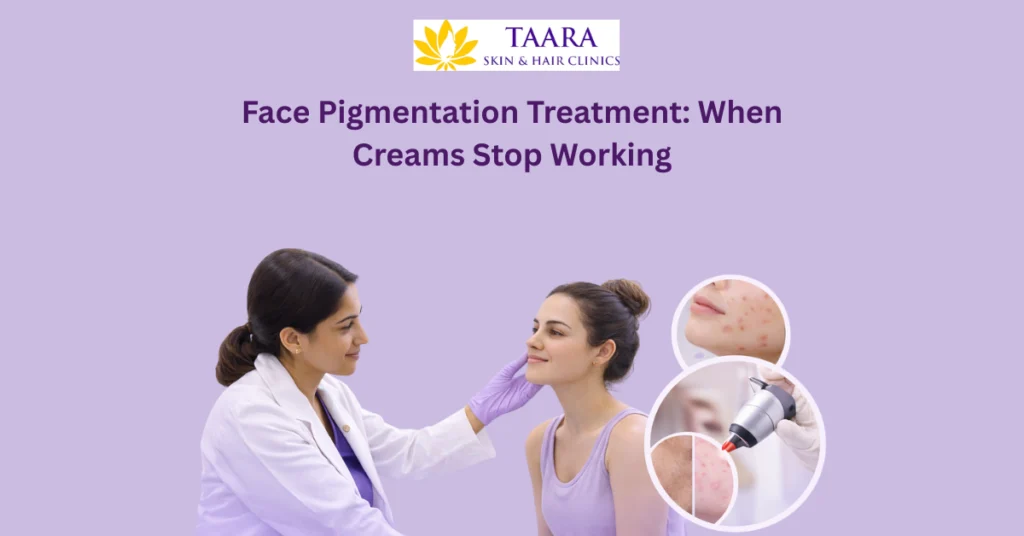
Happiness often follows someone buying a cream for dark spots. Right away, the skin improves slightly. Lighter seem the spots. Even now, you keep applying the cream each morning. Yet after a while, the cream loses its effect. Those deep stains remain behind. In truth, they might still grow heavier. Unsettling news brings discomfort along with unclear thoughts. If this is happening to you, do not worry. You are not alone. Many people face the same problem. When creams stop helping, it may be time to think about a professional face pigmentation treatment. In this blog, you will learn: Why pigmentation happens Why creams stop working When you need expert help The best face pigmentation treatment options How to stop pigmentation from coming back Here’s how it goes, one thing at a time. What Is Face Pigmentation Dark spots or skin shading that does not match can appear on the face. Melanin becomes overactive, causing these patches. Skin tone often turns uneven because of it. Melanin gives your skin its own natural shade. If melanin grows stronger than usual in a single spot, that place turns darker. Skin changes show up often, no exception here. Everyone might see them appear somehow. Common Types of Pigmentation Some pigments respond better to certain routines. Figuring out which one fits matters most. 1. Melasma Melasma shows up as dark spots, sometimes gray. You often see it on the cheeks, forehead, nose, and top part of the lip. Shifts in hormones, maybe pregnancy, perhaps birth control sometimes led to this. Not always clear but often tied to inner body adjustments. 2. Sunspots Sun damage often leaves behind flat dark patches. These marks go by several names, age spots being one of them. 3. Post-Inflammatory Hyperpigmentation Black spots show up once acne, zits, or skin damage fade. 4. Freckles Faint tan marks turn richer when sunlight hits them. One kind of skin issue responds best to specific pigment therapies. Trying different lotions at a guess won’t fix it every time. Why Creams Stop Working Some rely strictly on lotions. Yet those won’t remove stubborn skin color issues every time. Creams often lose effectiveness because of a few key issues. 1. Pigmentation runs thick Sometimes, skin creams stay within the outer layer. When melanin goes further below, those creams just cannot get through. 2. Using the wrong cream for your skin issue Pigment behaves differently every time. What clears acne scars could leave melasma untouched. 3. Hormonal Causes When hormones play a role in skin coloring, relying only on creams falls short. 4. Too Much Sun Exposure Skin gets darker when sunlight piles up each day. Protective lotions work poorly if clouds of UV stay overhead. 5. Skin grows accustomed to the cream. When stuff gets used again and again, skin can lose its reaction to what’s in things we put on it. 6. Overuse of Strong Creams Not every person checks with their doctor before trying steroid creams. Quick improvements can happen. Still, over time, skin health tends to deteriorate. Dark spots often grow more intense too. If creams no longer work, then deeper solutions need attention. Advanced treatments become possible when standard options fail. Signs You Need Professional Help See a skin expert when: Freckles or dark patches take around three to six months to disappear Skin tones are shifting Skin seems too light, maybe even red along the edges You see redness or burning Spots return after stopping creams Starting care soon leads to stronger outcomes. Waiting too far brings less gain. Best Face Pigmentation Treatment Options Skin looks at its own kind and how deep the color goes. After seeing that, a doctor picks what needs to happen next. These are usual ways work gets handled at job places. 1. Chemical Peels They put a certain liquid down for you during this process. That removes the broken outer layer. This helps: Brighten up dark areas Improve skin tone Make skin smooth Results might come slowly, sometimes taking multiple visits to show up well. 2. Laser Treatment Follicles respond when light energy reaches them. Melanin breaks down after laser exposure. Skin clarity often improves as a result. It works well for: Stubborn melasma Deep sunspots Old pigmentation Laser is a popular and effective face pigmentation treatment for long-term results. 3. Microdermabrasion A soft way to smooth the skin. Removes the outer layer, especially dead cells. It holds up when: A faint speck of color Dull skin Acne marks Over days, it lifts the look of your skin tone. 4. Medi-Facials A medical facial stands apart from everyday spa treatments. Done with professional guidance, it brings deeper results. They help: Improve skin glow Light skin spots can be less noticeable Keep outcomes steady after care 5. Prescription treatments Creams from doctors might come together in special mixes. These versions are more powerful, watched closely, and works better when handled right. Things like: Vitamin creams Mild exfoliating agents Skin-lightening formulas Most times, people try this kind of skin stain treatment only after talking with a skin expert. How Doctors Choose the Right Treatment Guessing has no place in medicine. What happens is someone watches closely Your skin type Your past health issues The cause of pigmentation The depth of pigment Following that, they build a custom treatment strategy. Outcomes tend to be improved and less risky when done this way. Benefits of Professional Face Pigmentation Treatment Fear often holds people back from getting help. Yet skilled treatment offers clear advantages. 1. Faster Results Professional treatments go further than lotions ever could. 2. Safe Procedures They follow proven ways. 3. Long-Lasting Improvement Stuff stays good longer if handled right. 4. Fewer risks exist Looking after your skin helps lower harm from problems. 5. Boost in Confidence A smoother face often means feeling better about yourself. A fresh start happens if skin pigmentation treatments go just right. Aftercare Is Very Important Treatment alone is not enough. Aftercare protects your results. Now, here’s your next step 1.
Tan Removal Treatment in Hyderabad: Clinic vs Home Remedies

A sun-tanned skin often shows up easily. In Hyderabad, quite a few people deal with it due to intense sunlight, high temperatures, and daily outdoor tasks. Exposure lasts too long melanin rises, texture dulls, color shifts. That is why so many try different methods to reduce skin pigment naturally. Home fixes work for certain folks. Meanwhile, others go to specialized skin centers. Each path seems like a good choice. Still, each one yields different outcomes. That means knowing the gap matters before going with either approach. This blog explains everything in simple words. What tan is, why it happens, how home remedies work, and how clinic treatments help you’ll get that covered. When you finish reading, picking the best Tan Removal Treatment in Hyderabad for your skin should feel like second nature. What Is a Suntan Too much sunlight hits your skin, causing a suntan. Outcomes radiation from the sun – UV light takes center stage. This signal wakes up melanin, shifting its output higher. Melanin brings shade to your skin, acting as its natural tint. Because of this: Flesh deepens into richer tones Skin tone seems off balance Tired skin shows a lack of brightness Light is what tan appears at the start. Later on, it grows richer, harder to shake. Removing it then turns tricky without extra effort. Why Does Suntan Happen More in Hyderabad Sunlight hits Hyderabad often throughout the seasons. With so many crossing paths each day heading to jobs or schools skin faces direct rays repeatedly. Common reasons include: Going out during peak sun hours Skincare misses daily sunscreen fix Sweating and pollution Outdoor jobs and sports When this happens, areas like the face, neck, hands, and feet tend to darken more quickly. Areas That Get Tanned the Most Some spots get more sun than others because they face it straight. That changes how much they catch. Not every piece of you feels it the same way. Here are the regions involved: Face Neck area Forearms Hands Feet Since these sections remain exposed, they darken sooner and become more visible. Home Remedies for Tan Removal Home fixes come first for lots of folks. They work out cheaply, stay simple, live right in the kitchen cupboards. Elder advice tends to point that way too. Home fixes often start with things found around the house. Popular Home Remedies People Try Lemon and Honey Some think lemon fades the skin. Moisture comes from honey, others say. A blend of two goes straight to the skin. Aloe Vera Gel Coolness rises when you touch aloe vera. Some apply it every night without stopping. Curd and Gram Flour A swipe across the skin pulls out grime, leaving surfaces smoother. Tomato Pulp Tomatoes carry natural acids. On tanned skin, folks tend to rub it in. Do Home Remedies Really Remove Tan A faint tan might respond to household treatments. These methods unfold over time, soft and slow. Weeks turn into months before change shows up clearly. They may: Brighten skin slightly Improve skin feel Remove surface dullness Still, nothing touches a stubborn, long-standing dark skin shade. Problems with Home Remedies Even though home remedies appear harmless, problems can still happen. Common issues show up now and then: Skin irritation Skin turns red, heat rises, discomfort sparks itch. Allergic reactions Uneven skin tone Taking lemons, they might irritate sensitive skin. Using natural treatments every day could weaken the skin’s shield instead of helping it. So, using home fixes doesn’t work for most people. Clinic-Based Tan Removal Treatments Here’s what happens in a clinic setting. Skin gets checked by a dermatologist at the start. After that comes a suggested approach one that fits your case. Home care can’t dig into issues like clinic methods do. Done right, those treatments bring change quicker and with fewer risks than self-applied routines. These days, plenty choose Tan Removal Treatment in Hyderabad from a skin clinic knowing experts handle it. Types of Tan Removal Treatments in Clinics Some skin clinics provide various kinds of treatments. Picking one often comes down to your skin’s nature and how dark your tan is. 1. Chemical Peels Removing dead skin cells is what chemical peels do. Excess melanin drops too, ends up lower. Benefits include: Skin color stays much the same Skin that feels alive, bright and clear Get things quicker Peels suit areas like the face, neck, and hands. 2. Laser Tan Removal Follicles respond better when treated early. Laser energy reaches into the skin’s layers. Melanin breaks down without harming surrounding tissue. It works well for: Fighting tough tans Improving skin clarity Lasting effects make it stand out People with sun-induced skin changes often see better results here. 3. Medical De-Tan Facials Skin gets cleaned, smoothed, and moistened through these treatments. They work with deep-quality item choices. A fresh look comes from careful steps taken together. They include: Gentle Effective Safe for everyday grooming Sometimes doctors recommend these for light to moderate skin darkening. Why Clinic Treatments Work Better Down below the surface, clinic treatments do their job in deeper parts of skin. Strength and amount get handled by doctors, not random outcomes. Safety at the outer layer stays intact because of how things are managed inside. They offer: Get things quicker Skin color stays much the same Faster setup means less chance of parts getting broken during installation. So, after just a couple of visits, results often show clearly in the clinic. Clinic vs Home Remedies: A Clear Comparison Look at them side by side, without confusion. 1. Results Home fixes: Slow progress Just a thin layer of change Clinic treatments: Get things quicker Removing dark skin tone 2. Safety Home fixes: No skin testing Risk of irritation Clinic treatments: Doctor oversight Skin-type based care 3. Time and Effort Home fixes: Effort each day Sometimes it takes weeks, maybe even months before things start making sense Clinic treatments: Last week’s meeting was quiet Professional care 4. Long-Term Benefits Home fixes: Temporary glow Clinic treatments: What stays bright