Hair Specialist vs Salon Hair Treatments: What Is the Real Difference?
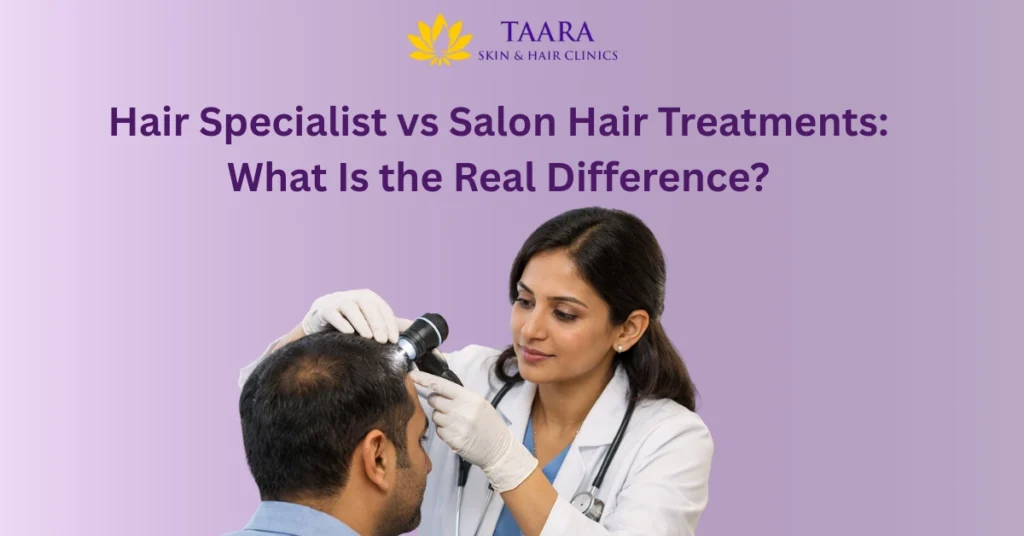
When people start losing their hair, the first reaction is usually not to visit a doctor immediately. Instead of searching for a “hair specialist near me”, many people wait, ignore the signs, or try simple home remedies first. This delay can allow hair fall to progress further.Most people first walk into a salon, which feels easier and sometimes feels familiar also. There is no fear of medical tests or diagnosis. The salon promises smooth hair and shiny hair with less hair fall, and quick visible results. At the same time, many people quietly search online for a hair specialist near me, but they hesitate. They are not sure if hair fall really needs medical attention or if salon care is enough. This confusion is very common in Hyderabad. People move back and forth between salon treatments and medical treatments, hoping something will finally work. Some see temporary improvement. Many see no change at all. Others notice hair fall getting worse over time. So what is the real difference between a hair specialist and salon hair treatments? And when should you choose one over the other? This blog gives you the clarity and explains that difference honestly, without exaggeration or fear. It is written to help people understand hair care clearly, not to push quick decisions. Why This Confusion Exists in the First Place Hair fall does not start suddenly for most people. It starts slowly. A few extra strands on the pillow. More hair in the bathroom drain. Thinner ponytail. Wider parting. At this stage, hair still looks “okay” from outside. So people assume it is a care problem, not a medical one. Salons are easily available, they talk confidently and also offer instant treatments and show before-and-after photos. Doctors, on the other hand, talk about time, cycles, and patience. That sounds slow and uncertain to someone who is already worried. This is why many people try salon solutions first. How Salons Look at Hair Problems Salons mainly focus on how hair looks. They deal with: Dryness Frizz Rough texture Dull appearance Split ends Breakage These are visible problems, and salons are trained to improve them. Salon treatments usually include: Hair spa Smoothening Keratin Protein masks Oil massages Anti-hair fall packages These treatments can make hair: Softer Shinier More manageable For some people, especially those with mild damage, this feels like improvement. But salons do not look at: Hair roots Hair growth cycle Scalp inflammation Hormonal influence Nutrient deficiency Genetic sensitivity Because these are not visible on the surface. How Hair Specialists Look at Hair Problems A hair specialist looks at hair very differently. For doctors, hair fall is not just about strands. It is about what is happening under the scalp. A hair specialist checks: Pattern of hair loss Speed of hair fall Scalp condition Family history Duration of the problem Lifestyle factors Medical background Doctors understand that hair fall often starts months before it becomes visible. By the time someone notices thinning, the damage has usually been going on silently. This is why a hair specialist near you does not promise instant results. They focus on control first, then improvement. The Biggest Difference: Appearance vs Cause This is the most important difference. Salon Treatments Improve appearance Work on hair shaft (dead part of hair) Give temporary smoothness Do not change hair growth Hair Specialist Treatments Address cause Work on scalp and follicles Aim to stop excessive shedding Support long-term regrowth Salon treatments can make hair look better without making hair healthier. Medical treatments aim to make hair healthier, even if visible change takes time. Why Salon Results Often Don’t Last Many people say that my hair felt great after the hair spa, but the hair fall came back. This happens because: The root problem was not treated Only surface conditioning was done The scalp environment stayed unhealthy Hair fall caused by: Hormones Stress Deficiency Inflammation Genetics cannot be solved by creams, masks, or oils alone. Salon treatments may hide the problem for a short time, but they do not stop it. What a Hair Specialist Near You Actually Treats A medical hair specialist treats: Chronic hair fall Progressive thinning Pattern hair loss Post-illness hair fall Post-pregnancy hair fall Stress-related shedding Scalp conditions Early baldness Doctors understand that hair fall is often a process, not an event. Treatment is planned step by step. The Role of Diagnosis in Medical Hair Treatment Diagnosis is something salons do not do. A hair specialist may: Examine scalp closely Check hair density Ask detailed questions Suggest blood tests if needed Identify triggers This step decides whether hair fall is temporary or have you seen any progress and regrowth is possible or not. Mainly about whether the treatment is actually needed or not, Without diagnosis, treatment becomes guessing. Are All Salon Treatments Harmful? No. Salon care is not useless and it has its place. Salon treatments are helpful when: Hair is dry or damaged Hair needs conditioning Styling has caused breakage Hair texture needs improvement But salons should not be expected to treat: Hair thinning Bald patches Excessive shedding Root weakness Using salon treatments for medical hair fall delays proper care. Why People Delay Visiting a Hair Specialist Common reasons include: Fear of lifelong treatment Cost concerns Expectation of quick fixes Belief that hair fall is normal Advice from friends Many people visit a hair specialist only after: Hair density reduces visibly Styling becomes difficult Hair part widens clearly At this stage, treatment becomes more challenging. Early consultation always gives better control. Hair Fall Is Not the Same for Everyone This is another key difference. Salons offer: One treatment for many people Hair specialists offer: Personalized plans Hair fall can be caused by: Hormones Genetics Nutrition Stress Medical conditions Environment Two people with similar hair fall may need completely different treatments. Only a doctor can identify this difference. What Happens When Medical Treatment Is Ignored When root causes are ignored: Hair fall continues silently Follicles weaken slowly Regrowth becomes difficult later Many patients