First Visit to a Hair Clinic: What Happens During Hair Evaluation
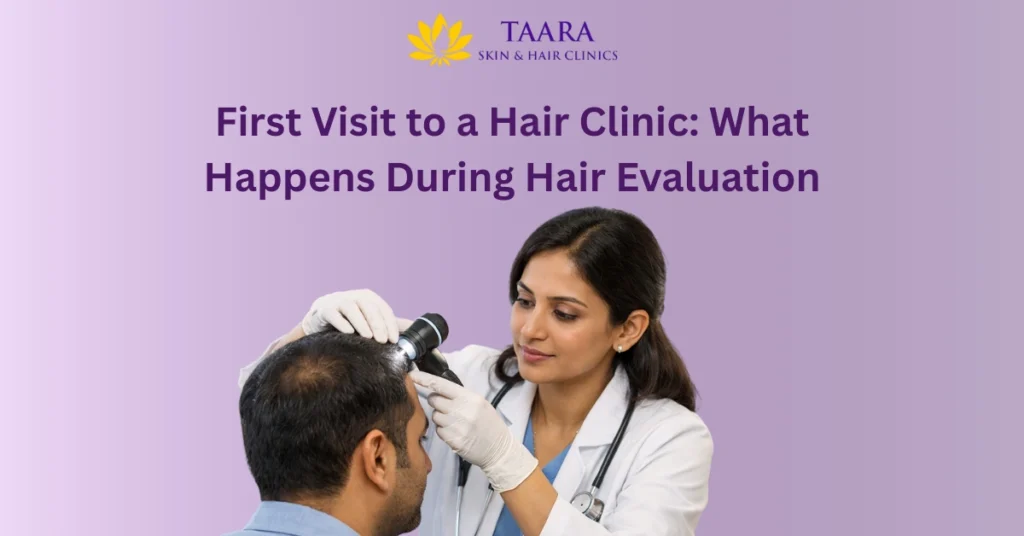
Searching for a hair clinic near me usually happens when hair fall stops feeling normal. It is no longer a few strands during washing. Hair feels thinner. Styling becomes harder. The mirror slowly shows you changes that were not there before. For many people, the first visit to a hair clinic brings a bunch of mixed feelings. There is a main concern, tension and sometimes fear also. People are unsure what will happen, what questions will be asked, and whether treatment will be pushed on them. In reality, the first visit is not about treatment. It is about understanding hair loss properly before taking any step forward. Why the First Hair Clinic Visit Matters Hair fall is not the same for everyone. Two people may experience similar shedding, but the reasons can be completely different. Some hair loss is temporary and few can progress slowly over years. Some are linked to health, stress, or lifestyle changes. Without knowing any cause, this treatment becomes like trial and error. Doctors treat hair fall as a medical concern, not just like a cosmetic issue or problem. That is why a proper evaluation is the most important part of hair care. Choosing a reliable hair clinic near me helps avoid unnecessary treatments and false expectations. What Usually Happens During Hair Evaluation A hair evaluation is done step by step. Nothing is rushed. Each part gives important information. Understanding Your Hair Fall History: The first part of evaluation is discussion. Doctors ask questions such as: When did the hair fall start Was it sudden or gradual Is there hair loss in the family Any recent illness, stress, or weight change Current medicines and supplements you used These questions help doctors to understand properly and tell them what may have triggered the hair fall. Hair often reacts to changes that happened months earlier, not immediately. Scalp and Hair Examination After discussion, the doctor examines the scalp closely. This includes checking: Hair density in different areas Thickness of hair Scalp condition like dryness, oiliness and dandruff Hairline and crown pattern This step helps identify whether hair follicles are still active or weakening. Many early signs are not visible to the patient but are noticeable during examination. Identifying the Type of Hair and Hair Loss Hair loss does not have just a single cause. During identifying or observing this, doctors try to identify patterns such as: Stress-related hair issues Nutritional deficiency like related to thinning Hormonal imbalance Genetic hair loss Scalp-related inflammation Correct identification is a major part. Treating the wrong way and wrong type of hair fall can delay recovery and sometimes worsen the condition also. Are Tests Always Required? Not everyone needs tests. Doctors suggest tests only when internal causes are suspected. When Blood Tests Are Suggested Blood tests may be advised to check: Iron levels Vitamin deficiencies Thyroid function Hormonal balance These tests help confirm whether hair fall is linked to health conditions. Responsible clinics avoid unnecessary testing. What Doctors Look for That Patients Often Miss Many people notice hair fall only when thinning becomes visible. Doctors are trained to identify the early warning signs. They observe the changes in the hair texture and also uneven density or volume, early widening of part lines, and scalp inflammation. These signs help to identify the future hair loss before it becomes severe and worse. Early detection allows simpler and more effective treatment. Why Online Advice Is Not Enough Before visiting a hair clinic near me, most people try online tips. Oils, shampoos, home remedies, and supplements are often tried repeatedly. Online advice does not consider the personal scalp condition and also medical history, mainly the hair loss pattern. What works for one person may not work for another. Many patients visit clinics only after months of experimentation, by which time hair thinning has already progressed. Common Fears Before Visiting a Hair Clinic Many people delay their visit because of fear. Some worry they will be advised surgery immediately. Others fear high costs or long-term treatment. A few feel embarrassed for delaying care. In reality, the first visit is about clarity. Doctors do not force decisions. They explain the condition and possible options calmly. Why One Visit Is Not Enough Hair fall treatment is a process, not a one-time solution. The first visit helps to treat the problem in a correct way. Follow up the visits which helps to allow doctors to track the progress and adjust treatment as per the problem. Hair will respond slowly, and improvement happens over months. Stopping treatment early or skipping follow-ups is a common reason hair fall returns. How Hair Clinics Track Progress Progress is not judged only by mirror appearance. Doctors track: Reduction in daily hair fall Improvement in hair strength Better scalp health Slowing of thinning areas Small changes over time indicate that treatment is working, even before you notice a visible regrowth appears. When a Hair Clinic Visit Can Prevent Permanent Hair Loss Hair weakens gradually. In early stages, they can recover. In advanced stages, recovery becomes difficult. Waiting for too long reduces the treatment options. Early identification helps to preserve existing hair and slow future loss also. What a Good Hair Clinic Will Explain Clearly During evaluation, a responsible hair clinic does not confuse patients with medical terms. Doctors take time to explain what is happening in simple language. They explain whether the hair fall is temporary or long-term hair fall and they talk about what can be controlled and what needs regular care, also explain what results are realistic and what results are not. Clear explanation builds trust. Patients who understand their condition and follow the treatment better and see more proper results. Why Hair Loss Feels Worse Than It Actually Is Hair fall often feels more severe than it truly is. Stress makes people notice every fallen strand. Washing days, combing, and styling increase visibility of shed hair. Doctors explain that some daily hair fall is normal. What matters is pattern, duration, and thinning over