
A clear, healthy, glowing, natural skin is what each and every one of us wishes. But pollution, sunrays, acne, stress and aging cause it to lack natural lust and vitality. Henceforth, many are looking toward dermatology procedures and skin care instead of just merely using products.
Currently the two most popular treatments offered by dermatology clinics are chemical peels and laser treatment. These skin treatments help to improve skin’s texture, reduce skin’s pigmentation and rejuvenate skin. But many still face the issue of picking and choosing between these two methods.
Some are attracted to chemical peels due to its simplicity and affordability. Others are tempted by lasers as they promise to correct and rejuvenate skin deeper and effectively with long-lasting effects. But still the correct answer is your skin type, concern, lifestyle and requirements.
If you are looking online for chemical peel vs laser treatment this blog explains both options in the easiest and most realistic way possible. From their advantages, drawbacks, suitability to the recovery time and effectiveness.
Understanding Chemical Peels
A chemical peel is a dermatological procedure that removes damaged outer skin layers using specially prepared exfoliating solutions. Once the dead skin cells shed naturally, fresher and healthier skin becomes visible.
Dermatologists often recommend chemical peels for:
- Mild acne scars
- Uneven skin tone
- Suntan
- Pigmentation
- Dull skin
- Fine lines
Chemical peels are mainly effective on the superficial layers of the skin and are therefore often selected by clients looking for brightening effects without extended recuperation times.
How Chemical Peels Improve the Skin
The chemicals are applied directly to the face during treatment by a dermatologist. The procedure removes superficial layers of skin and promotes cell generation.
As old cells peel away, the skin gradually becomes:
- Smoother
- Brighter
- Softer
- More even toned
They also promote light collagen production that evens out texture with time.
Types of chemical peels
Chemical peels are often categorized into three groups according to the depth to which they penetrate the skin:
Superficial peels
Light peels which slough off only the top layer of skin. They are best suited for those beginning peels or with minor dullness of the skin.
Best for:
- Instant glow
- Mild pigmentation
- Uneven texture
- Oily skin
Recovery is generally rapid with few restrictions on returning to normal activities straight away.
Medium Peels
Medium-depth peels have a greater effect and reach more deeply in the skin.
Best for:
- Acne marks
- Moderate pigmentation
- Early aging signs
- Rough skin texture
These peels may cause visible peeling for a few days.
Deep Peels
A deep peel will work at the deeper layers of the skin and give you skin resurfacing at an intense level.
Best for:
- Deep wrinkles
- Severe pigmentation
- Advanced skin damage
These being stronger, the recovery time will be longer and require rigid aftercare.
Advantages of Chemical Peels
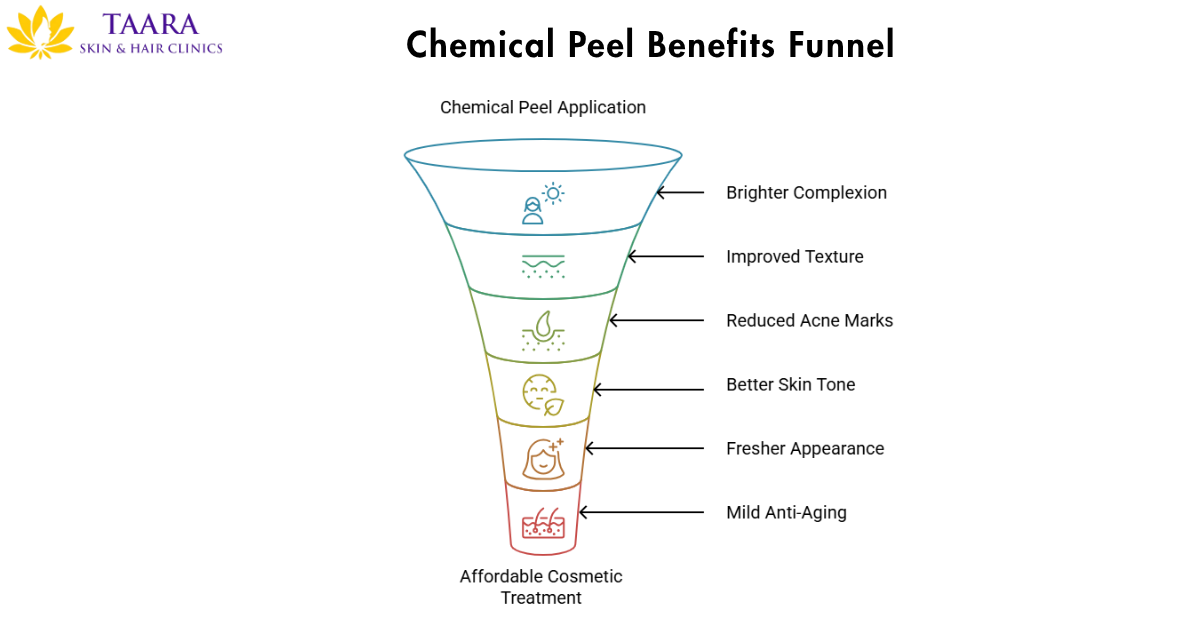 Chemical peels remain an incredibly popular choice since they provide results without invasive methods.
The advantages of chemical peels are:
- Brighter complexion
- Improved skin texture
- Reduced acne marks
- Better skin tone
- Fresher appearance
- Mild anti-aging effects
- Reduced tanning
Chemical peels are also usually quite affordable, again compared to the newer forms of cosmetic treatments.
What is laser skin treatment
Laser treatment is a high-tech method for skin care that utilizes intense light rays to destroy any diseased cells and cells on skin surfaces. Laser treatments can penetrate the dermis and stimulate higher collagen production when compared to chemical peels.
The depth the laser can reach makes this the perfect choice for more severe skin issues.
Dermatologists commonly recommend laser procedures for:
- Deep acne scars
- Wrinkles
- Open pores
- Stubborn pigmentation
- Skin tightening
- Uneven texture
How Laser Treatments Work
The laser systems transmit concentrated light energy onto a target region on your skin. Depending on the type of laser that is being used, the damaged layers of skin can either be removed, or the layers of skin under the surface stimulated to produce collagen.
This controlled skin repair process improves:
- Skin firmness
- Texture
- Elasticity
- Overall tone
The skin appears younger and smoother with the increase of collagen production.
Common Types of Laser Treatments
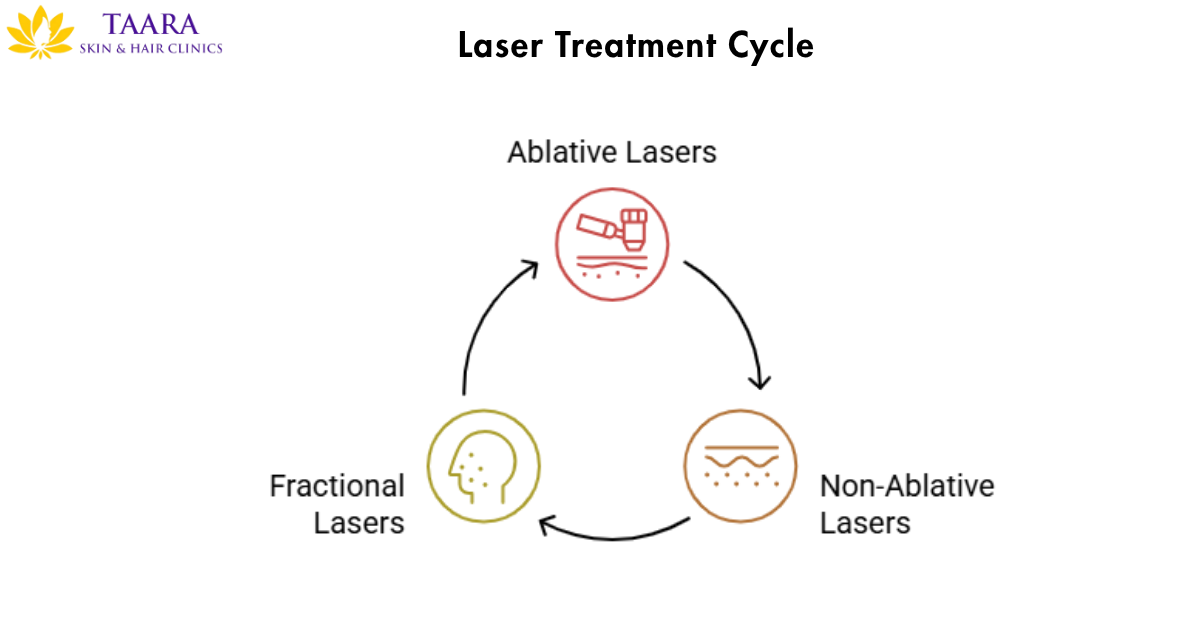 There are lasers that treat different skin issues.
Ablative Lasers
These lasers strip away the damaged upper layers of the skin and give drastic resurfacing results.
Commonly Used for:
- Deep scars
- Wrinkles
- Severe skin texture issues
Because they are intensive, healing time is usually longer.
Non-Ablative Lasers
These lasers work beneath the skin without removing surface layers.
Ideal for:
- Mild wrinkles
- Early aging signs
- Collagen stimulation
Recovery is usually faster compared to ablative lasers.
Fractional Lasers
These treat small parts of the skin and leave adjacent areas of skin intact.
Best for:
- Acne scars
- Pigmentation
- Fine lines
- Skin resurfacing
They offer effective results with comparatively shorter downtime.
Benefits of Laser Treatments
Laser procedures provide deeper skin correction and advanced rejuvenation.
Major Benefits Include:
- Improved acne scars
- Reduction in wrinkles
- Better skin firmness
- Smoother texture
- Reduction in stubborn pigmentation
- Enhanced collagen production
- Youthful skin appearance
Also, most laser treatments are not just working during treatment but improving skin for many weeks after it.
Chemical Peel vs Laser Treatment: Major Differences
Now, when you can actually pinpoint the difference between the two procedures it’s much easier to compare them. Both are aimed at improving your complexion, but they treat at completely different depths and by different processes, have different downtime periods and therefore, produce quite different effects.
Difference in Treatment Depth
Chemical Peels
Chemical peels mainly target the upper skin layers. Therefore, they are effective for surface-level concerns.
Laser Treatments
Lasers reach deeper into the skin and work below the surface in areas of structural damage.
As a result, laser procedures usually provide stronger correction for advanced skin problems.
Recovery Time Comparison
Downtime is one of the biggest deciding factors for patients.
Recovery After Chemical Peels
- Mild redness
- Light peeling
- Temporary dryness
Most people recover within a few days.
Recovery After Laser Treatment
- Redness
- Swelling
- Sensitivity
- Temporary skin irritation
Some laser treatments can take a little while to recover due to the intensity.
Which Treatment Is More Comfortable
The majority of light peels only cause mild tingling.
The lasers can be more of a warm or slightly burning sensation as they are penetrating more deeply into the skin. However, the dermatologist can put a numbing cream onto the skin before beginning the treatment.
Which gives faster results
Chemical peels give noticeable brightening in a few days.
The lasers can take more time to see final results as they work on collagen remodeling that happens gradually over time, but the results can be deeper and more long-lasting.
Chemical Peel vs Laser Treatment for Acne Scars
Acne scarring is perhaps the most frequent request from patients wanting dermatologic procedures.
For an effective discussion of chemical peel vs laser treatment for scarring the depth of the scar is the deciding factor.
When Chemical Peels are Helpful
Chemical peels work well for:
- Mild acne marks
- Post-acne pigmentation
- Superficial uneven texture
They improve overall skin appearance gradually through controlled exfoliation.
When Laser Treatments Work Better
Laser procedures are generally more effective for:
- Deep acne scars
- Pitted scars
- Uneven skin texture
- Long-term acne damage
Lasers stimulate collagen deep so it can repair the damaged structure in skin.
Comparison of Chemical Peel and Laser for pigmentation
Pigmentation is common in people of all ages. And common in countries with heavy sun exposure.
Treatment helps in lightening hyper-pigmented skin by different mechanisms.
Chemical Peel for pigmentation
Peels remove superficial pigmented skin layers.
They are effective for:
- Tanning
- Mild dark spots
- Uneven tone
- Post-inflammatory pigmentation
The peels also increase luminosity of the skin.
Laser Treatments for Pigmentation
Lasers focus deeper pigments in the skin.
They are suitable for:
- Sun damage
- Deep pigmentation
- Resistant dark patches
- Advanced skin discoloration
However, laser settings must be carefully adjusted for Indian skin tones to avoid side effects.
Which Treatment is Better for the Aging Skin
Aging is a natural process, and the skin starts to produce less collagen. In turn, it develops wrinkles, slack skin and dull complexion.
Both have their respective anti-aging advantages but yield different results:
Chemical Peels for Early Aging Signs
Chemical peels improve:
- Mild fine lines
- Dull texture
- Uneven skin tone
They refresh tired-looking skin and create a healthy glow.
Laser Treatments for Advanced Aging
Laser treatments are often preferred for:
- Deep wrinkles
- Skin tightening
- Collagen loss
- Mature skin damage
Because lasers stimulate collagen deeply, they can produce stronger anti-aging improvements.
Cost Comparison Between Both Treatments
Budget is another important factor while choosing a skin procedure.
Chemical Peel Costs
It is also cheaper as less complicated methods are employed.
Laser Treatment Costs
Laser procedures usually cost more due to:
- Advanced technology
- Specialized equipment
- Multiple treatment sessions
Despite these shortcomings, many consider laser treatment a sound investment due to the end benefits.
Which option for Indian skin
Indian skin types are at greater risk for developing pigmentary problems after aggressive treatments. Thus, customization of treatment is a critical factor.
Chemical Peels
Mild and professionally selected peels are usually safe for Indian skin.
Laser Treatments
Another way in which laser treatment can be safe is by having it carried out by an expert dermatologist in the correct setting using suitable settings. If you are in two minds as to chemical peel vs laser treatment, then you should definitely consult a qualified skin specialist.
Side Effects You Should Know
Every skin procedure may cause temporary side effects.
Possible Side Effects of Chemical Peels:
- Dryness
- Redness
- Mild irritation
- Peeling
Possible Side Effects of Laser Treatments:
- Swelling
- Redness
- Sensitivity
- Temporary discomfort
The side effects are usually easily overcome with proper aftercare and protection.
Can Both Treatments Be Combined?
Yes. For instance, dermatologists frequently use a combination of laser procedures and chemical peels in order to increase the outcome of skin rejuvenation.
For example:
- Peels may improve surface brightness
- Lasers may target deeper scars and collagen repair
Combination procedures often provide balanced and more comprehensive results.
However, treatment planning should always be done professionally.
How to Choose the Right Treatment
The best procedure for you is down to various factors.
Chemical Peels May Be Better If:
- You want affordable skin rejuvenation
- Your pigmentation is mild
- You prefer minimal downtime
- Your acne scars are superficial
Laser Treatments May Be Better If:
- You have deep scars
- You need stronger anti-aging correction
- Your pigmentation is stubborn
- You want deeper skin resurfacing
Consulting a dermatologist helps determine which treatment matches your skin goals.
Importance of Professional Consultation
A lot of people pick a treatment just based on what they see on the Internet or what their friends recommend on social media. Sadly, that type of treatment will not work for all of the skins.
Professional consultation helps identify:
- Skin sensitivity
- Pigmentation depth
- Scar severity
- Treatment suitability
- Recovery expectations
Even better, they can tailor treatments for improved and safer results.
Essential Aftercare Tips
Post-treatment care is critical for both chemical peels and lasers.
Follow These Tips Carefully:
- Apply sunscreen daily
- Avoid direct sun exposure
- Keep the skin hydrated
- Do not scrub peeling skin
- Use gentle skincare products
- Follow dermatologist instructions strictly
The aftercare will help healing and will prolong the effects of the treatment.
Frequently Asked Questions
Which treatment has the quickest glowing effect?
Chemical peels tend to be a quicker method to skin glowing as it will get rid of the layers of tired, dull skin.
Is laser treatment painful?
All laser treatments have an element of pain involved. This is greatly reduced by using a topical anesthetic cream.
Can chemical peels completely get rid of acne scars?
Chemical peels can treat superficial acne scarring and pigmentation, but severe acne scarring requires laser treatments.
Is laser treatment safe for Indian skin?
Yes, it is very safe if carried out correctly by qualified dermatology specialists at the correct settings
How many sessions are usually required?
The number of sessions depends on your skin concern, treatment type, and desired results.
Final Thought
The answer really depends on your skin type and goals.
Chemical peels are good for light pigmentation, dullness and superficial acne scarring. The chemical peel is also inexpensive, easy and requires little to no recovery time.
Lasers have the ability to give you correction on deeper levels of the skin and stimulate more collagen. The treatment is highly effective for deep acne scars, wrinkles and pigmentation that just will not go away.
Rather than just follow trends of what’s “popular” to do for treatment purposes, it is always safer to discuss this with a skin expert with some know-how as the skin expert will be able to read your skin.
In conjunction with a suitable treatment strategy and appropriate skin care, both methods can lead you to a cleaner, younger-looking skin.